
Who Was Pablo Presbere? The Bribri Leader Who Defended Talamanca
Updated: Jul 5
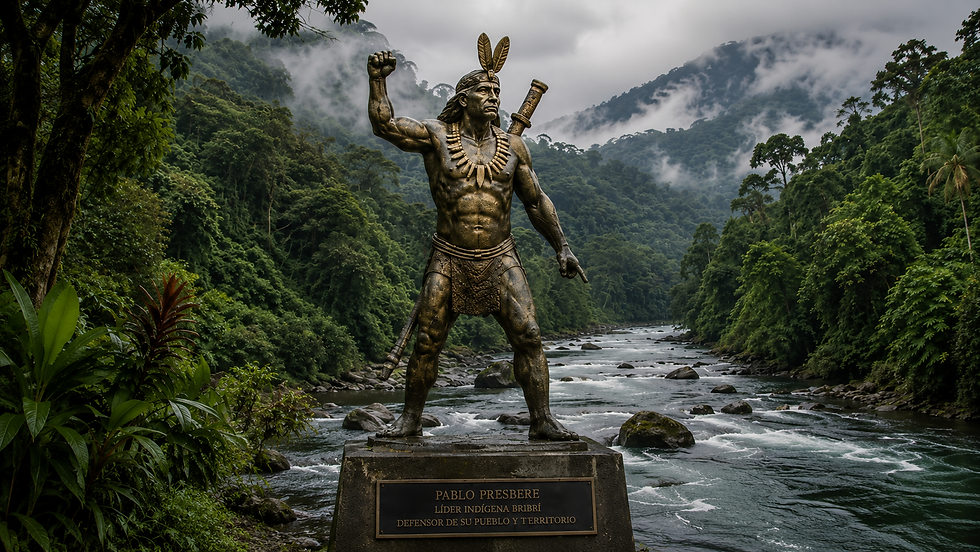
Every July 4, Costa Rica Remembers Pablo Presbere
Every July 4, Costa Rica commemorates the legacy of Pablo Presbere, one of the country's most important Indigenous leaders. More than three centuries after his death, his legacy continues to live on in the Bribri communities of Talamanca, where ancestral traditions, language, medicinal plant knowledge, and cacao ceremonies remain an essential part of everyday life.
Understanding his story means understanding the resilience of the Bribri people and one of the most fascinating chapters of Costa Rican history.
Pablo Presbere Was Not His Real Name
Although history remembers him as Pablo Presbere, that was not his original name. In the Bribri language, he was known as Pabru Presberi.
According to the most widely accepted interpretation, Pabru means "Chief of the Macaws," while Presberi refers to "the place where brackish waters flow." Together, his name reflects the close relationship between the Bribri people, wildlife and the rivers of Talamanca.

The Great Indigenous Rebellion of Talamanca
During the late 17th century, Spanish colonial authorities established missions and settlements throughout Indigenous territory. In 1709, Pabru Presberi led one of the most significant Indigenous uprisings in Costa Rican history, defending his people's territory, culture and spiritual beliefs.

Capture and Execution
Following the rebellion, Pabru Presberi was captured and taken to Cartago. He was executed in 1710, but his death did not end Indigenous resistance. For many years afterward, much of Talamanca remained outside effective Spanish control, allowing the Bribri and Cabécar peoples to preserve their traditions and identity.

A Legacy That Lives On
More than three centuries after the death of Pabru Presberi, his greatest legacy is not only remembered in history books—it is alive in the everyday life of the Bribri people. Their language, traditions, spiritual beliefs, and relationship with nature continue to shape life in Talamanca, making the Bribri one of Costa Rica's most remarkable living Indigenous cultures.
For centuries, the Bribri people have developed an extraordinary understanding of the rainforest and its medicinal plants. This knowledge has been carefully passed from elders to younger generations through observation, practice, and oral tradition. Many medicinal plants continue to be used today, reflecting a deep respect for nature and sustainable living.

Cacao: More Than Food
For the Bribri people, cacao is much more than an agricultural crop. It represents hospitality, spirituality, family traditions, and cultural identity. Preparing cacao is both a cultural practice and a way of preserving ancestral knowledge that has survived for generations.
Visitors quickly discover that every stage of the process tells a story about the relationship between the Bribri people and their ancestral territory.

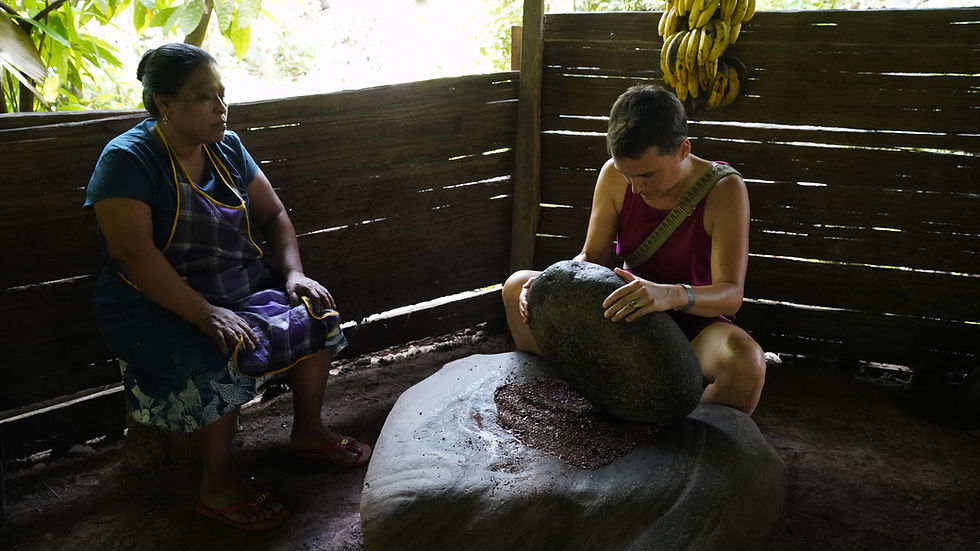
One of the most iconic moments of the Bribri cacao tradition is grinding roasted cacao by hand on a traditional stone metate.
Although modern equipment exists today, many families continue using ancestral techniques passed down through countless generations. Every movement reflects patience, craftsmanship, and the desire to preserve a living cultural tradition.

A Living Culture
More than 300 years after the death of Pabru Presberi, the Bribri people continue speaking their language, protecting their forests, preserving their traditions, and sharing their knowledge with future generations.
His legacy is no longer found only in historical documents—it is found in the people of Talamanca who continue keeping their culture alive every day.
Frequently Asked Questions About Pablo Presbere
Who was Pablo Presbere?
Pablo Presbere, originally known as Pabru Presberi, was the Bribri leader who led the Great Indigenous Rebellion of Talamanca in 1709. Today he is remembered as one of Costa Rica's greatest symbols of Indigenous resistance.
What does Pabru Presberi mean?
According to the most widely accepted interpretation, Pabru means "Chief of the Macaws," while Presberi refers to "the place where brackish waters flow."
Why is Pablo Presbere important in Costa Rican history?
He led one of the most significant Indigenous uprisings against Spanish colonial rule and became a lasting symbol of Indigenous resilience and cultural preservation.
Where did Pablo Presbere live?
He lived in the Talamanca region of southeastern Costa Rica, ancestral homeland of the Bribri people.
Why is July 4 celebrated as Pablo Presbere Day?
Every July 4, Costa Rica honors Pablo Presbere for his leadership, courage, and lasting contribution to the preservation of Indigenous identity and cultural heritage.
Can visitors experience Bribri culture today?
Yes. Visitors can still experience Bribri traditions, cacao preparation, medicinal plants, handicrafts, language, and ancestral knowledge through respectful community-based cultural experiences.
Where can I learn more about Bribri culture?
One of the best ways is by visiting Indigenous communities in Talamanca and participating in authentic cultural experiences guided by Bribri families.
Experience Bribri Culture in Talamanca
History becomes even more meaningful when it can be experienced firsthand. At Cahuita Tours, we proudly work alongside Bribri families to offer respectful cultural experiences where visitors can learn directly from the people who continue preserving these traditions.
Our Bribri Cultural Tour includes:
Traditional medicinal plants
Traditional cacao preparation and tasting
Indigenous handicrafts
Visit to a beautiful waterfall
Authentic cultural exchange with Bribri families
Whether you are passionate about Indigenous history, sustainable tourism, or Costa Rica's cultural heritage, this experience offers a unique opportunity to connect with one of the country's richest living traditions.
Book Your Bribri Cultural Tour Today
Discover the living legacy of Pabru Presberi and experience one of Costa Rica's most authentic Indigenous cultures in the heart of Talamanca.
Comments