
Discover the Enigmatic Great Potoo: A Nighttime Adventure in Cahuita
Updated: Jun 26

When darkness settles over the Caribbean rainforest of Costa Rica, an entirely different world comes to life. Hidden among the shadows is one of the forest’s most mysterious and fascinating birds: the Great Potoo (Nyctibius grandis). Often called the "ghost of the forest," the Great Potoo is a master of disguise. Its remarkable camouflage, haunting calls, and nocturnal lifestyle make it one of the most sought-after species for birdwatchers, photographers, and nature enthusiasts visiting Costa Rica.
Recently, during a night walk near Cahuita, I was fortunate to encounter one of these incredible birds. Moments like these remind me that some of the rainforest's greatest treasures only reveal themselves after sunset.
Nature’s Ultimate Camouflage Expert
Few birds in the world can match the camouflage abilities of the Great Potoo. Its plumage is a complex mosaic of gray, brown, black, and white patterns that perfectly mimic the appearance of tree bark. During the day, the potoo remains completely motionless, perched upright on dead branches or tree trunks. By extending its body and pointing its beak upward, it becomes almost indistinguishable from the wood itself.
Even experienced naturalists can walk past a Great Potoo without noticing it. Its feathers resemble weathered bark, lichens, and mosses so convincingly that the bird seems to disappear into the forest. This extraordinary adaptation helps protect it from predators while it rests throughout the day.

A Giant of the Potoo Family
The Great Potoo is the largest of the seven potoo species found throughout the Neotropics. Adults can reach over 60 centimeters (24 inches) in length and possess an impressive wingspan. Despite its size, it remains surprisingly difficult to spot. Its cryptic coloration and motionless behavior allow it to blend seamlessly into its surroundings, making every sighting feel like discovering a hidden secret of the rainforest.
Its enormous dark eyes, among the largest relative to body size of any bird, immediately reveal its nocturnal nature.
When the Rainforest Comes Alive
As daylight fades, the Great Potoo awakens. Equipped with exceptional night vision, it becomes an efficient aerial hunter. Rather than searching through vegetation, it chooses elevated observation posts where it patiently waits for prey to pass by. From these strategic perches, the bird launches swift, silent flights to capture insects in midair before returning to its lookout point.
Its diet consists mainly of:
Beetles
Moths
Cicadas
Grasshoppers
Flying ants
Other nocturnal insects
This sit-and-wait hunting strategy allows the potoo to conserve energy while remaining highly effective.

Eyes Built for Darkness
One of the Great Potoo’s most remarkable features is its vision. Its huge eyes gather even the smallest amounts of available light, allowing it to detect movement in near-total darkness. But perhaps even more fascinating are the tiny slits in its eyelids. These specialized openings enable the bird to monitor its surroundings even when its eyes appear closed. While resting motionless during the day, the potoo can still detect approaching predators without revealing that it is awake. Combined with its camouflage, this adaptation makes it one of nature’s most effective masters of concealment.
The Haunting Voice of the Night
Many visitors hear a Great Potoo long before they ever see one. Its call is deep, eerie, and unforgettable. Echoing through the darkness, it sounds almost supernatural and has inspired countless legends throughout Latin America. For generations, local folklore has associated the potoo’s haunting voice with spirits, lost souls, and forest mysteries. Standing beneath the rainforest canopy while hearing its call drift through the night is an experience that few travelers ever forget.

A Symbol of the Hidden Rainforest
Although the Great Potoo ranges from southern Mexico to South America, encounters remain special because of its secretive habits and exceptional camouflage. For wildlife photographers and birdwatchers, spotting one is often considered a highlight of any tropical rainforest adventure. In the Southern Caribbean region of Costa Rica, species like the Great Potoo showcase the incredible biodiversity that emerges after dark. They remind us that the rainforest is not only a daytime destination—it is a living ecosystem that transforms completely once the sun goes down.
Why Night Tours Reveal a Different World
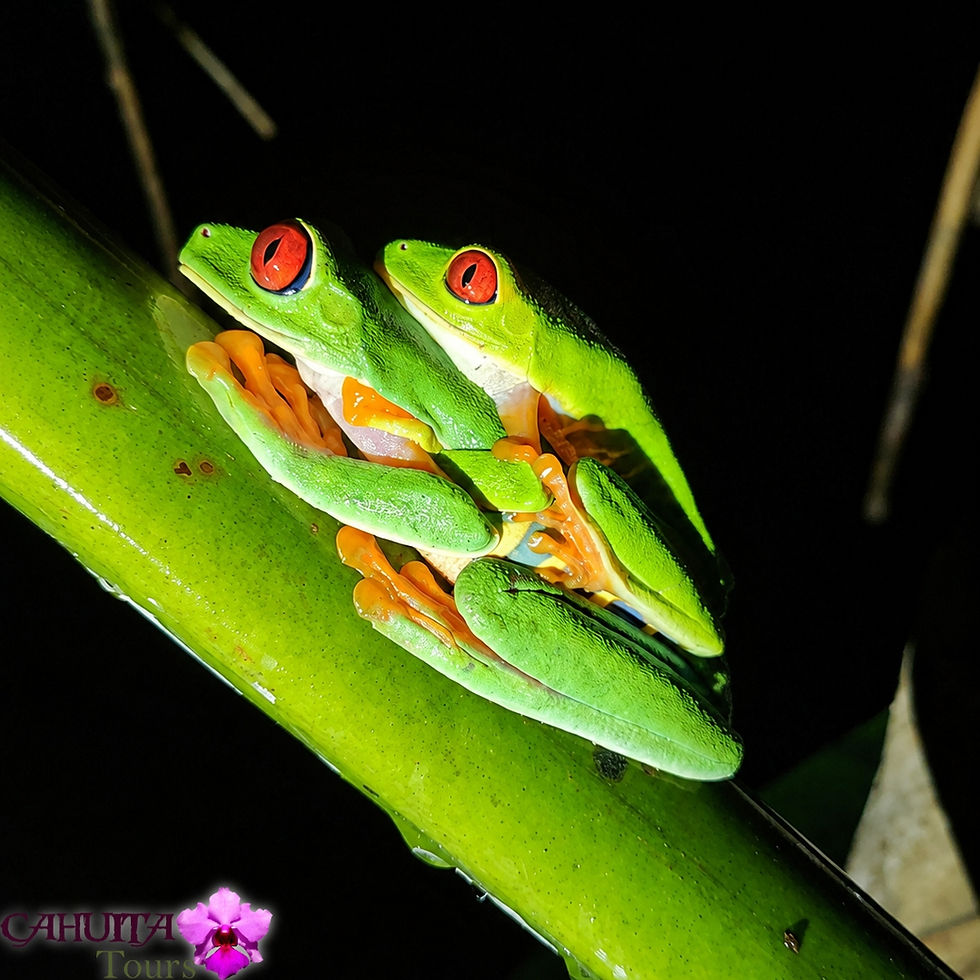
Many visitors explore the rainforest during daylight hours, but few realize how much wildlife remains hidden until nightfall. As darkness arrives, the forest fills with new sounds and activity. Frogs begin calling, insects emerge, mammals become active, and nocturnal birds take their place among the shadows. A guided night walk offers the opportunity to observe species that are rarely seen during the day, providing a deeper understanding of the rainforest and its complex ecosystems.
Experience the Magic of Cahuita After Dark
Encountering a Great Potoo in the wild is a reminder that some of nature’s most extraordinary creatures reveal themselves only to those willing to explore after sunset. Whether you are a passionate birdwatcher, wildlife photographer, or simply a traveler seeking an authentic rainforest experience, a night walk in Cahuita offers unforgettable opportunities to discover the hidden side of Costa Rica’s Caribbean forest.

Join Our Cahuita Night Tour
Step into the rainforest after dark and discover a world filled with mystery, sounds, and wildlife that most visitors never experience. From colorful frogs and fascinating insects to elusive nocturnal birds like the Great Potoo, every night brings new surprises. Book your Cahuita Night Tour and experience the rainforest as few people ever do. 🌙🦉


Comments