
Red-Eyed Tree Frog: A Fascinating Look at Agalychnis callidryas Amplexus


The Red-Eyed Tree Frog (Agalychnis callidryas) is one of the most recognizable amphibians in the tropical forests of Costa Rica and Central America. Its large red eyes, bright green body, and striking colors make it one of the region's most iconic frogs.
However, encountering one during a nighttime exploration can reveal much more than its remarkable appearance. On this occasion, we had the opportunity to observe a pair during amplexus, an important behavior in their reproductive cycle.
🌙 A Nocturnal Frog
The Red-Eyed Tree Frog is primarily nocturnal. During the day, it usually remains still on leaves, using its green coloration to blend into the vegetation and avoid detection.
Once night falls, it becomes active, moving among leaves and branches in search of food. During the breeding season, males also use their calls to attract females.
Its characteristic red eyes are perhaps its most famous feature, but they are not the only striking detail. The sides of its body and its limbs display vivid colors that may remain hidden while the frog is resting and become more visible when it moves.
This combination of camouflage, nocturnal behavior, and vivid coloration makes encountering one in its natural habitat a memorable experience.
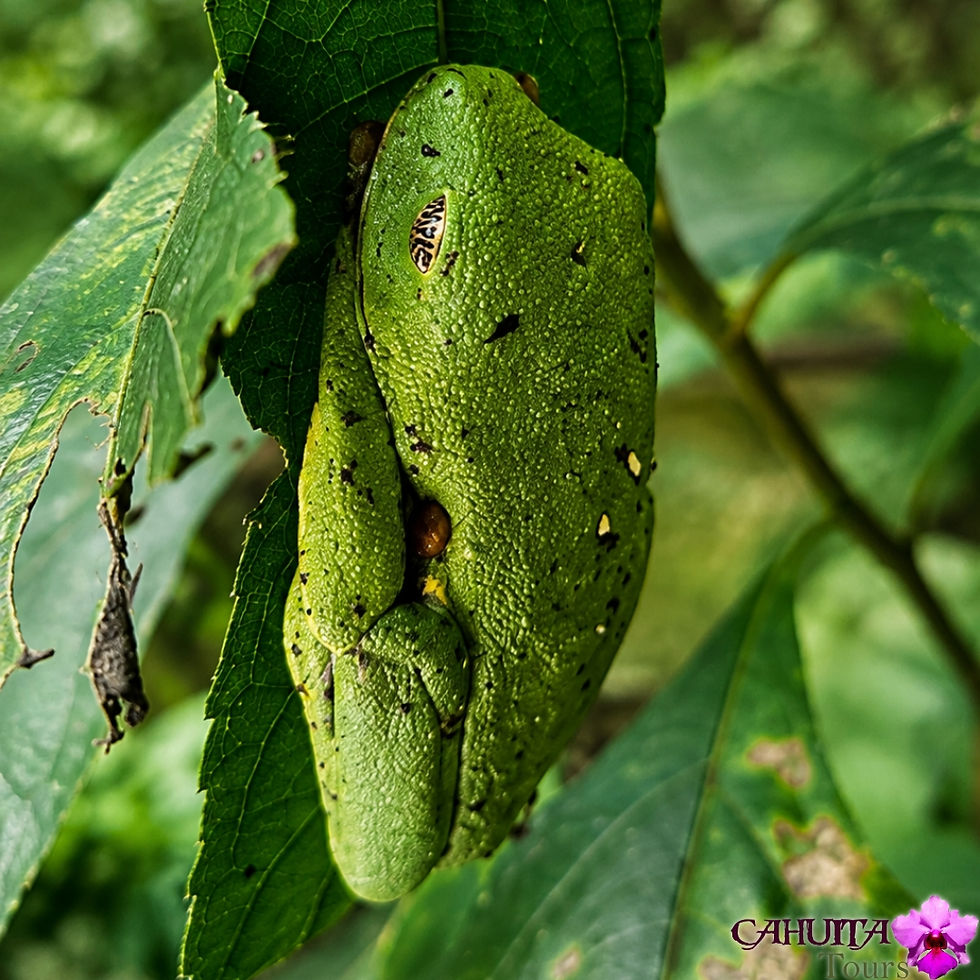
🐸 What Is Amplexus?
Amplexus is the reproductive behavior used by frogs and other tailless amphibians. During this process, the male positions himself on the female's back and holds her with his front limbs.
This position allows the pair to remain together during reproduction. When the female releases her eggs, the male releases sperm over them, allowing fertilization to take place.
In Agalychnis callidryas, amplexus may continue for an extended period while the pair searches for a suitable location for laying eggs.
What may look like a simple embrace between two frogs is actually an essential part of the species' reproductive process.
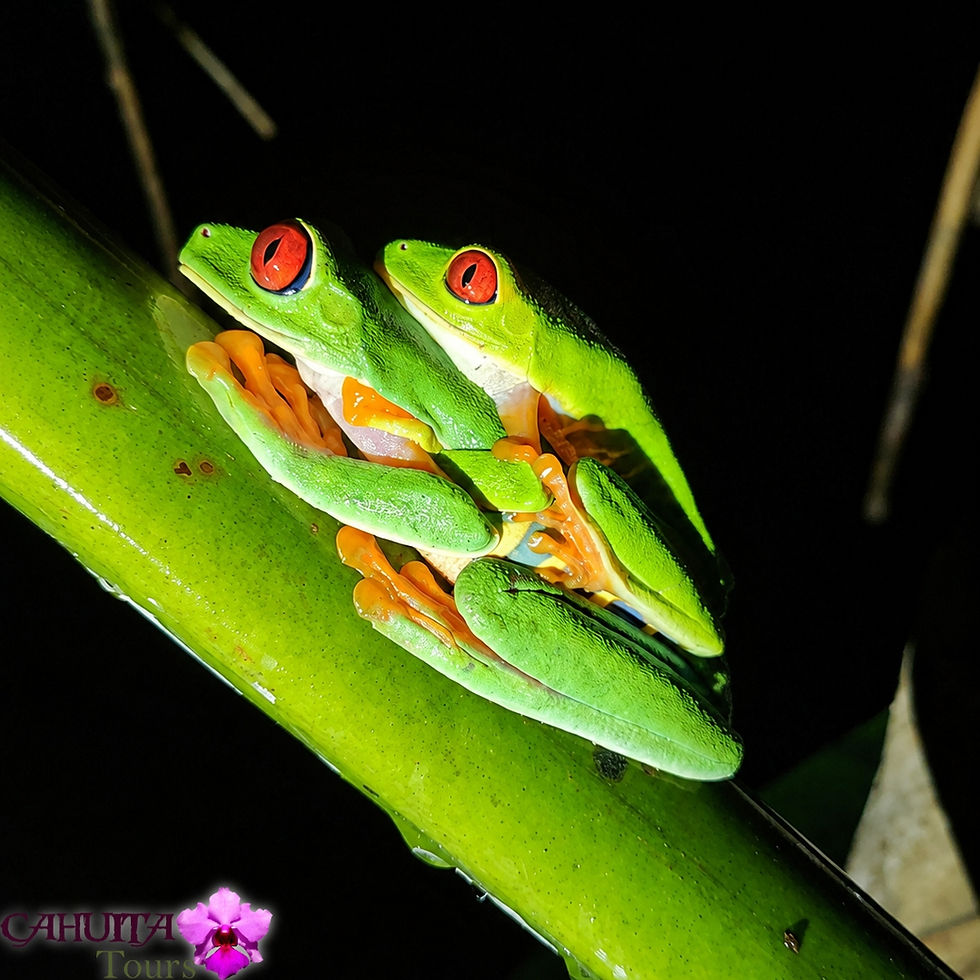
💚 A Pair During Reproduction
Finding a Red-Eyed Tree Frog during a nighttime walk is already a special encounter. Finding two individuals in amplexus provides an opportunity to observe a natural behavior that usually takes place among vegetation and during the hours of darkness.
During this process, the male remains on the female's back while the pair prepares for egg-laying.
For wildlife observers, encounters like this are particularly valuable because they allow us to discover not only what a species looks like, but also how it behaves and reproduces.
Wildlife photography can therefore become a way of documenting moments that are part of an animal's natural life, but that we rarely have the opportunity to witness.
🌿 Eggs Laid on Leaves
One of the most fascinating aspects of Red-Eyed Tree Frog reproduction is where the eggs are laid.
Unlike many other frogs, Agalychnis callidryas typically deposits its eggs on leaves hanging above water, rather than directly in the water itself.
The embryos continue developing inside the eggs until they are ready to hatch. At that point, the tadpoles emerge and fall into the water below the leaf.
This reproductive strategy creates a direct connection between the forest vegetation and the small bodies of water that the tadpoles need for their continued development.

🌧️ The Importance of Rain
Rain plays an important role in the reproductive activity of many tropical amphibians.
Wet nights can trigger increased activity and calling among frogs. Small pools, ponds, and temporary accumulations of water can also become important places for tadpoles to develop.
For those exploring the forest at night, these conditions provide opportunities to witness behaviors that are rarely visible during daylight hours.
The pair of Agalychnis callidryas we encountered in amplexus is a perfect example of how, after rainfall, the forest can reveal a side of its life that remains hidden during the day.
🌱 The Role of Amphibians in the Forest
Amphibians play important roles in tropical ecosystems. They are part of the food web and contribute to the natural control of populations of small invertebrates.
They are also particularly sensitive to environmental changes. Protecting forests, vegetation, and the aquatic habitats where they reproduce is essential for maintaining healthy amphibian populations.
Protecting these small inhabitants also means protecting the ecosystems they are part of.

🔎 A Species Worth Discovering
The Red-Eyed Tree Frog may be famous for its striking colors, but understanding its behavior makes this species even more fascinating.
Observing a pair in amplexus offers a glimpse into an important stage of their reproductive cycle. From finding a mate to laying eggs on leaves above water, each part of the process is adapted to life in the tropical forest.
Encounters like this are a reminder that during a nighttime walk, extraordinary events can be happening just a few meters away, hidden among the leaves and darkness.
📍 About the Species
Common name: Red-Eyed Tree Frog
Scientific name: Agalychnis callidryas
Family: Phyllomedusidae
Activity: Primarily nocturnal
Habitat: Tropical forests and areas associated with bodies of water
Diet: Mainly small invertebrates


Comments